


One Cable for iPhone and Android: Is It Actually Possible?
One cable can absolutely charge both an iPhone and an Android phone. But it depends on which iPhone you own. If you have an iPhone 15 or newer, any standard USB-C cable works for both. If you have an iPhone 14 or older, you need a different approach because those models use Apple's Lightning connector.
This guide explains exactly what works, what does not, and the simplest way to carry one cable for all your devices regardless of which iPhone you own.
The Short Answer: Can One Cable Charge Both iPhone and Android?
Yes, with the right setup. A single cable can charge both an iPhone and an Android phone. The catch is that the cable must have the correct connector for each device. For newer iPhones (iPhone 15 and later), a standard USB-C cable works for both. For older iPhones (iPhone 14 and earlier), you need either a cable with a Lightning connector on one end and USB-C on the other or a universal magnetic charging cable with swappable tips. The wall adapter , the box which plugs into the wall, is almost never the problem.
Why iPhone and Android Cables Differ
The difference between iPhone and Android cables comes down to the physical connector and the standards each company chose over the years.
Apple's Lightning vs. USB-C Transition
Apple introduced the Lightning connector in 2012. It was smaller and easier to use than the Micro-USB standard of that era. For over a decade, every iPhone used Lightning. That changed in 2023 with the iPhone 15 series, which switched to USB-C. The transition happened partly because of European Union regulations requiring a universal charging standard. Apple still sells older iPhones which use Lightning, so both connectors remain common.
Android and the USB-C Standard
Android manufacturers moved to USB-C years before Apple. By 2017 , almost every new Android phone used USB-C instead of Micro-USB. USB-C is an open standard, meaning any company can build devices and cables without paying licensing fees. It supports faster charging, faster data transfer and a reversible plug which works no matter which way you flip it.
USB-A vs. USB-C Wall Adapters
The wall adapter, the brick you plug into an outlet, traditionally used a USB-A port. Newer adapters use USB-C. Both can charge either phone brand as long as you have the right cable. A USB-A to Lightning cable charges an older iPhone. A USB-A to USB-C cable charges an Android or a new iPhone. The adapter itself does not care what phone is on the other end.
Can an Android Charger Charge an iPhone?
This depends entirely on what you mean by "Android charger." Most people use that phrase to describe the entire setup , cable plus wall adapter.
What Actually Happens When You Plug In
If the "Android charger" is a USB-C to USB-C cable plugged into a USB-C wall adapter, you can charge a new iPhone 15 or later by simply using the same cable. The USB-C connector fits both phones. For an older iPhone with Lightning, the same cable will not fit at all. The USB-C plug is physically different from Lightning and will not go into the port.
If the "Android charger" means a USB-A to USB-C cable plugged into a USB-A wall adapter, you can charge an older iPhone by replacing the cable. The wall adapter works fine. You just need a USB-A to Lightning cable instead of the USB-A to USB-C cable.
Is It Okay to Use an Android Adapter for an iPhone?
Yes. The wall adapter from an Android phone is safe to use with an iPhone. Modern adapters use USB Power Delivery, a standard which lets the phone and adapter talk to each other . The phone asks for the amount of power it needs and the adapter provides it. Using a higher wattage Android adapter will not hurt an iPhone. The iPhone only draws the power it needs, no more.
Can an iPhone Charge an Android?
This is less straightforward because older iPhones use Lightning and most Android phones use USB-C.
Lightning vs. USB-C Cable Ends
A standard Lightning cable has Lightning on one end and USB-A or USB-C on the other. That cable cannot plug directly into an Android phone because the Android phone expects a USB-C plug. You would need an adapter, a small piece which converts Lightning to USB-C. These adapters exist. But they are easy to lose and add another thing to carry.
When It Works and When It Doesn't
For two newer phones, an iPhone 15 with USB-C and an Android with USB-C, a single USB-C to USB-C cable works perfectly. You can charge the Android from the iPhone or the iPhone from the Android. The phones negotiate which one provides power and which one receives it. For an older iPhone with Lightning, charging an Android phone directly is possible only with an adapter . And even then, the charge speed is very slow because iPhones do not output much power.
It's the Cable End, Not the Charger, That Matters
Most people focus on the wrong part of the setup. The wall adapter is almost never the issue. The cable ends determine what works and what does not.
How USB Power Delivery (PD) Negotiates the Charge
USB Power Delivery is a smart charging protocol. When you plug a phone into a USB PD adapter, the phone and adapter have a quick conversation. The phone says, "I can accept up to 27 watts." The adapter responds, "I can provide up to 65 watts. I will give you 27." The adapter then sends exactly what the phone requests. This negotiation happens automatically and safely, regardless of whether the phone is an iPhone or an Android.
Why the Wall Brick Is Usually Universal
The wall brick, the adapter itself, is almost always universal. A USB-A brick from 2015 works with any phone if you have the correct cable. A USB-C brick from this year works the same way. The brick simply provides power. It does not know or care what brand of phone is on the other end. The only real requirement is that the brick provides enough power for the phone to charge at a reasonable speed. Most modern bricks handle this easily.
The Real Solution: One Universal Cable for Both
Carrying multiple cables is frustrating. The cleaner answer is a single magnetic cable which works with any device by swapping the tip.
How a Universal Magnetic Cable Works
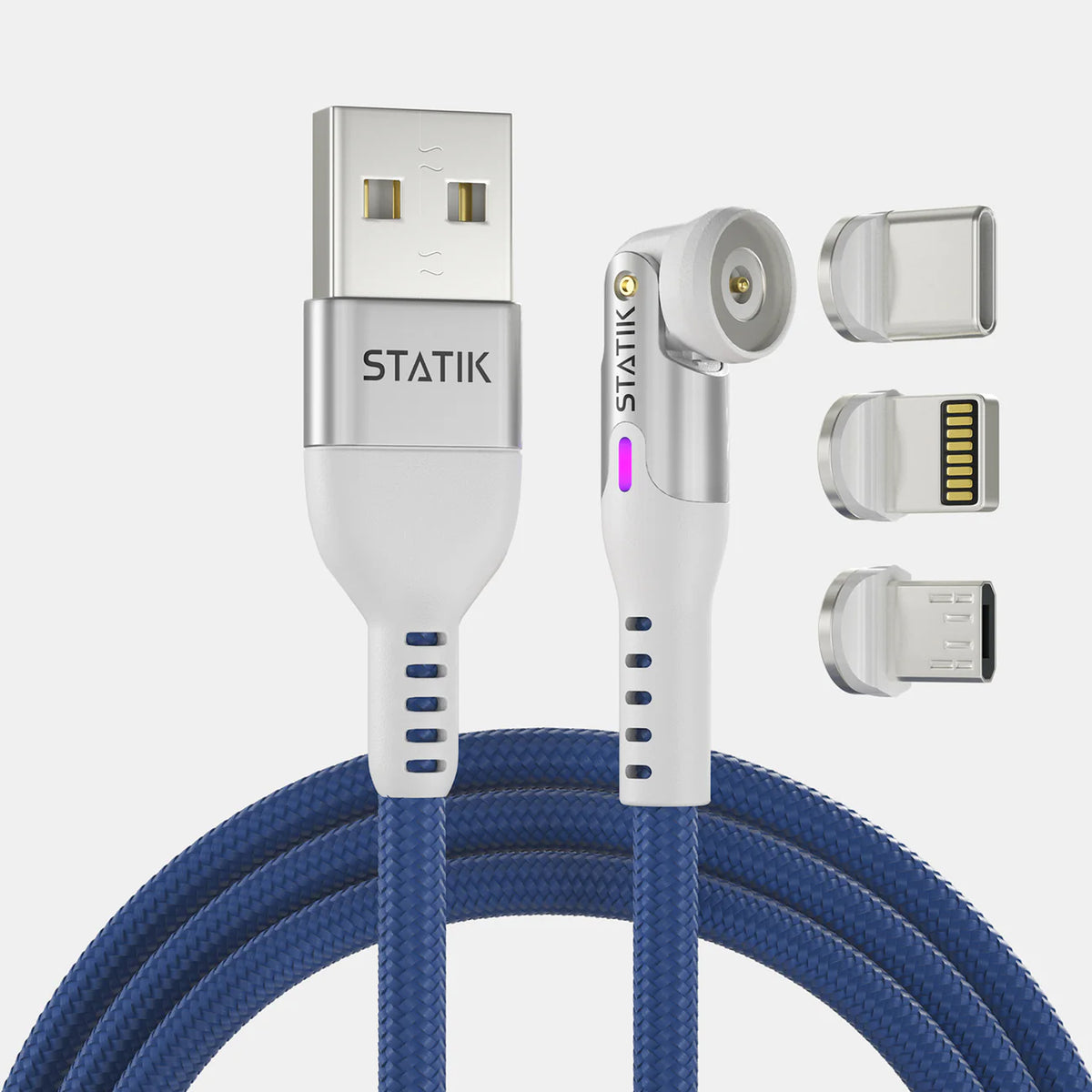
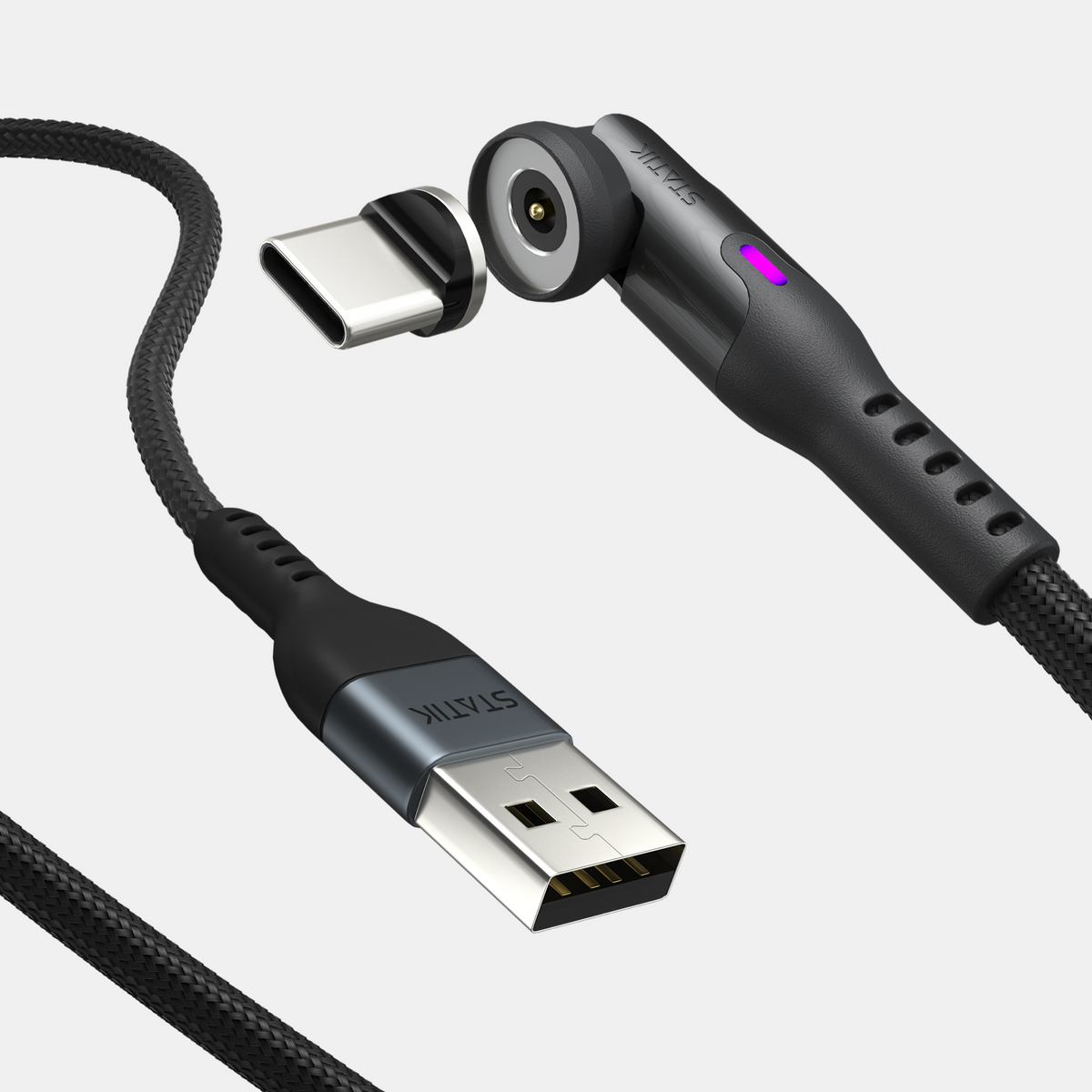
A universal magnetic usb charger uses a two part design. A small magnetic tip stays inserted in your phone's charging port. The cable itself has a magnetic connector on its end. When you bring the cable near the phone, the magnets snap together. To switch between an iPhone and an Android, you simply keep a magnetic tip in each phone. The same cable snaps onto either one.
Swappable Tips for Lightning, USB-C and Micro-USB
The Statik system includes separate magnetic tips for Lightning, USB-C and even older Micro-USB devices . You leave a Lightning tip in your iPhone and a USB-C tip in your Android. One magnetic charger cable then charges both phones. The cable never wears out your charging ports because you never plug or unplug anything. The tips stay in place. And the cable snaps on when needed.
For households with mixed devices or anyone who switches between an iPhone and an Android, this is the simplest one cable solution.
iPhone vs. Android Charging: How They Compare at a Glance
The table below shows how charging setups work across different combinations of iPhones, Android phones, cables, and adapters.
Side-by-Side Comparison Table
| Setup | Works? | Notes |
|---|---|---|
| USB-C to USB-C cable + USB-C adapter + iPhone 15 or later | Yes | Full speed charging. Same cable works for Android. |
| USB-C to USB-C cable + USB-C adapter + iPhone 14 or earlier | No | USB-C plug does not fit Lightning port. |
| USB-A to Lightning cable + any USB-A adapter + older iPhone | Yes | Standard setup for iPhone 14 and earlier. |
| USB-A to USB-C cable + any USB-A adapter + Android | Yes | Standard setup for most Android phones. |
| USB-A to USB-C cable + any USB-A adapter + iPhone 15 | Yes | USB-C fits the new iPhone. Works perfectly. |
| Android wall adapter + Lightning cable + older iPhone | Yes | The adapter is universal. Cable must match the phone. |
| iPhone wall adapter + USB-C to USB-C cable + Android | Yes | Adapter works. Cable works. Full speed charging. |
| Lightning cable + adapter + Android phone | Slow | Requires a Lightning to USB-C adapter. Charge speed is slow. |
| Universal magnetic charging cable + tips in both phones | Yes | One cable charges both. No port wear. Tips stay in each phone. |
Key Takeaways From the Comparison
The wall adapter is almost never the problem. The cable end that goes into your phone is what matters . For the cleanest setup, either use USB-C devices exclusively or get a universal magnetic cable with swappable tips for Lightning and USB-C.
Magnetic Cables





FAQs About Charging iPhone and Android With One Cable
Yes, if both phones have USB-C. An iPhone 15 or later can charge an Android phone using a USB-C to USB-C cable. The phones automatically figure out which one sends power and which one receives it. Older iPhones with Lightning cannot charge an Android phone without an adapter. And the charge speed will be very slow.
Take the Android charger, meaning the wall adapter and cable. If the cable has USB-C on the end, it fits an iPhone 15 or later directly. If the cable has USB-C and you have an older iPhone, you need to replace the cable with a USB-C to Lightning cable. The wall adapter itself works fine either way.
Yes, with the right cable. The Android wall adapter works with any iPhone as long as you use a cable which has the correct connector for your iPhone. For iPhone 15 or later , the same USB-C cable works. For older iPhones, you need a USB-C to Lightning cable or a USB-A to Lightning cable, depending on the adapter.
Yes. The wall adapter from an Android phone is safe to use with an iPhone. Modern adapters use USB Power Delivery, which automatically provides the correct amount of power. A higher wattage Android adapter will not damage an iPhone.
Yes. This is completely safe. The iPhone and the adapter communicate with each other. The iPhone asks for the power it needs and the adapter provides it. The brand of the adapter does not matter.
No. Any standard USB-C cable works with the iPhone 15 or later. You can use the same USB-C cable you use for an Android phone, a laptop , a tablet or most other modern devices. The cable does not need to be Apple branded.


