


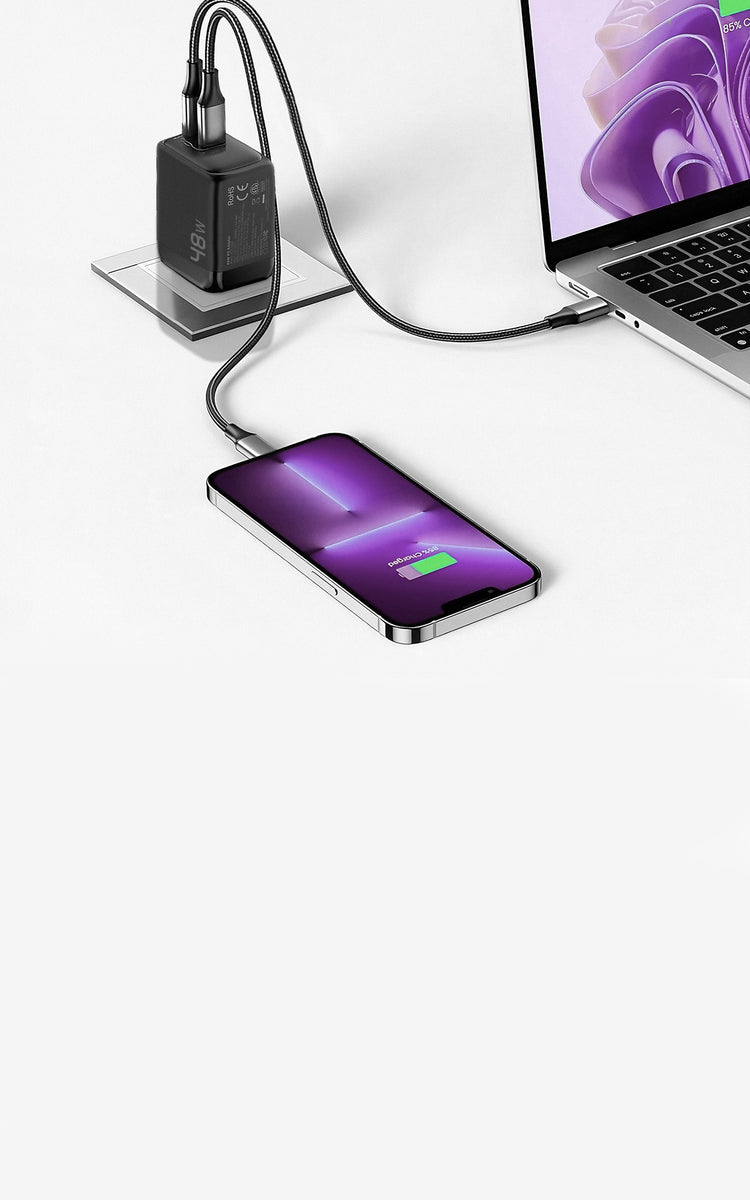

Your phone, your cable, and your charger are in a constant negotiation. Every second they're connected, they're agreeing on the fastest, safest speed all three can handle. When one component can't keep up, everything slows down to match, regardless of what the wattage says on the box. That's why fast charging isn't about a single product. It's about the system.
Rule No. 1
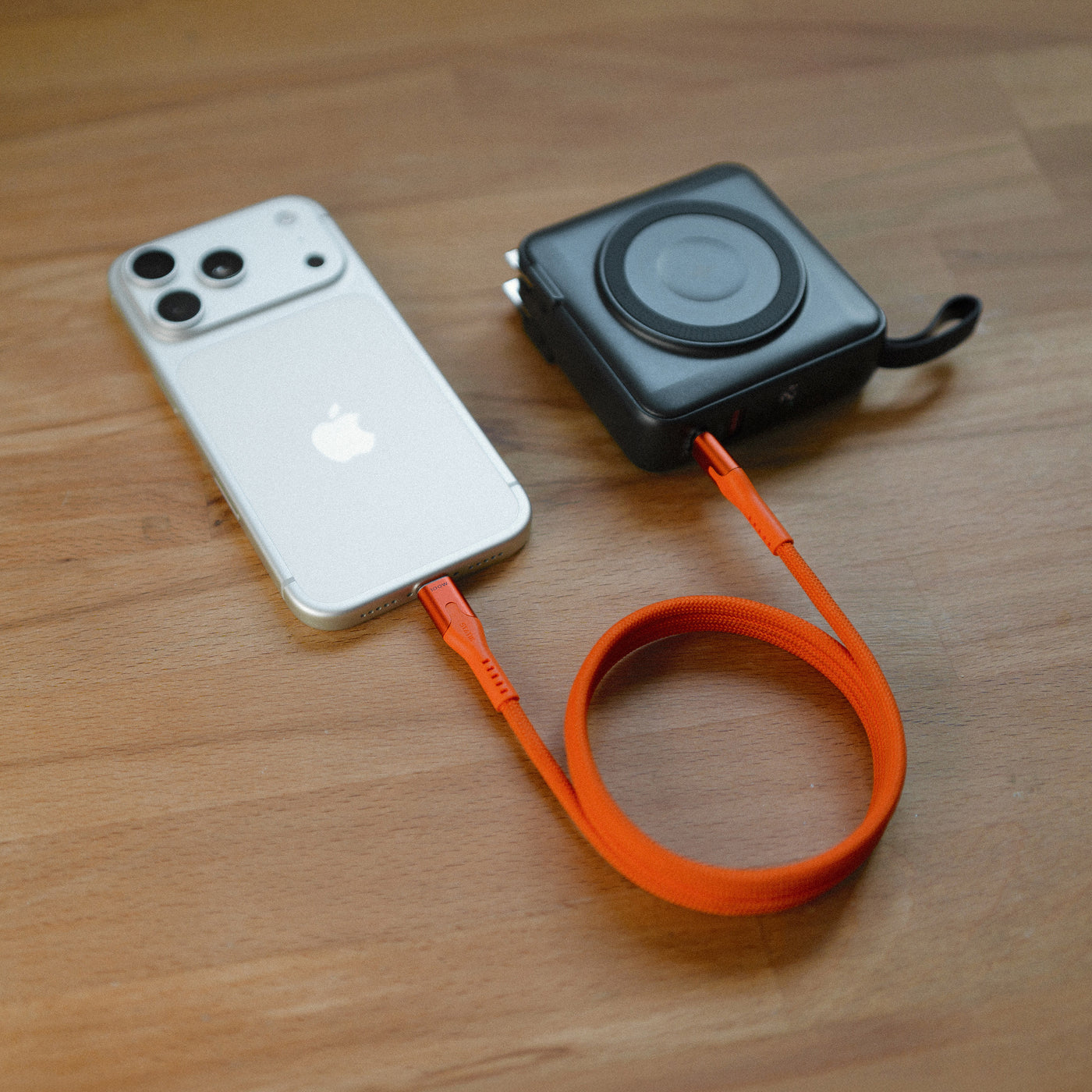
Your Devices Are Always Negotiating.
Every second they're connected, your phone, charger, and cable are actively communicating: agreeing on the fastest, safest speed the system can handle. If any one of them falls short, the whole system slows down to match.
Rule No. 2
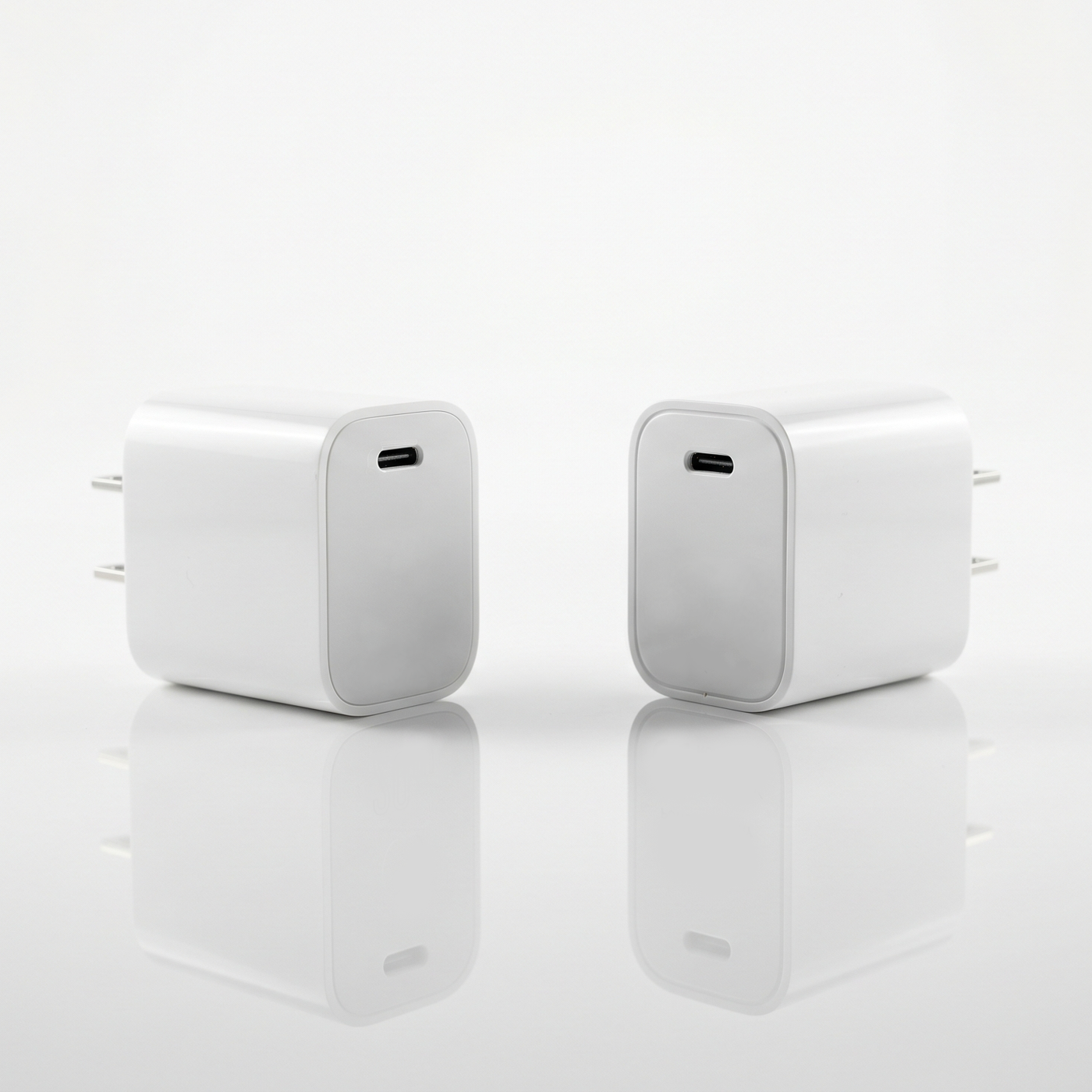
Speed is Set by the Weakest Link.
Your setup only performs as well as its least capable component. If one piece can't keep up, everything slows down to match. That's where most setups fail. Budget chargers often advertise high wattage, but don't consistently deliver it in real use.
Rule No. 3
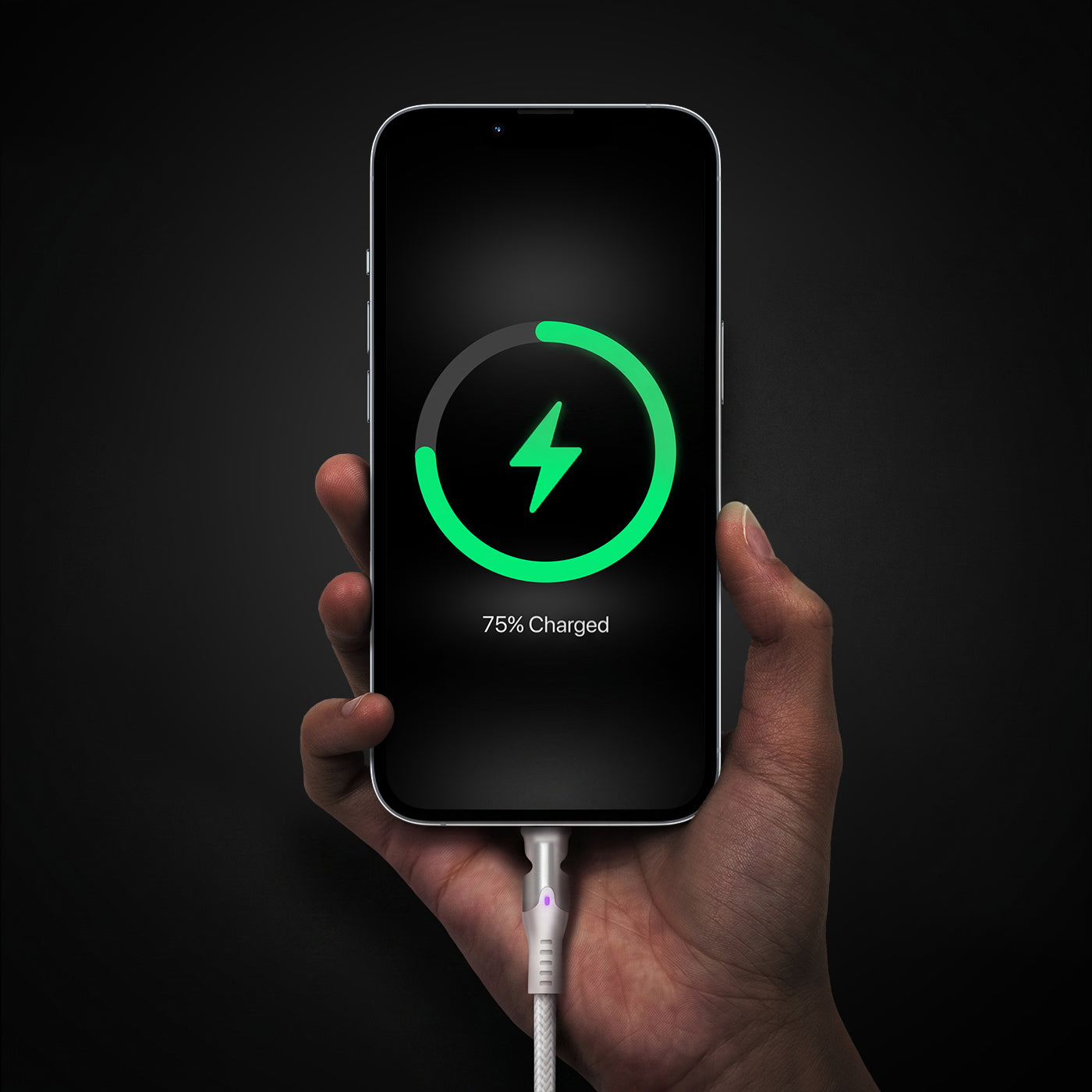
When All 3 Agree, You Charge at Full Speed.
When your phone, charger, and cable are aligned on the same protocol, the system stops holding back.
No mismatches. No hidden limitations. Just a clean, efficient flow of power from source to battery.
Built on BlitzCharge Technology
The Setup that Actually Delivers


Frequently Asked Questions
You need three things working together: a compatible phone, a high-wattage charger (brick), and a cable that supports fast charging. If one of them is lacking, your charging speed will drop.
In most cases, the issue is the cable or a mismatch in charging protocols. Also, charging naturally slows down after around 80% to protect your battery.
Modern devices are designed to manage heat and power efficiently. While faster charging generates more heat, built-in protections help minimize long-term damage when using quality chargers and cables.


