


Magnetic vs. Standard Charging Cables: Side-by-Side Guide
Charging cables seem simple but the choice between magnetic and standard designs affects how you use your devices every day. Standard cables have been around for years. The magnetic cable offers a newer, more convenient approach, using a snap-on connection which changes the way you plug in. This guide compares both types across speed, safety, durability and cost. By the end, you will know which one fits your routine.
What Is a Standard Charging Cable?
A standard charging cable is the traditional cord which comes with most phones, tablets and laptops. It relies on a friction based connection, meaning you push the plug firmly into your device's port until it clicks or seats into place.
How a Standard Cable Works
Inside the cable, small metal contacts line up with matching contacts inside your device's charging port. When you insert the plug, these contacts touch, allowing electricity to flow from the wall adapter to your battery. The fit needs to be tight enough to stay connected. But not so tight that it damages the port over time. This balance is hard to achieve consistently across thousands of plug and unplug cycles.
Common Standard Cable Types
USB-C, the current industry standard found on most new Android phones, laptops, tablets and even some Apple devices, supports fast charging and data transfer.
Lightning, Apple's proprietary connector used on iPhones and older iPads, is being phased out in favor of USB-C.
Micro-USB, an older standard still found on budget devices, headphones and some accessories, is slower and only fits one way.
What Is a Magnetic Charging Cable?
A magnetic charging cable replaces the friction fit with a magnet-based connection. Instead of pushing a plug into a port, you bring the cable near your device, and magnets pull it into place automatically.
How a Magnetic Cable Works
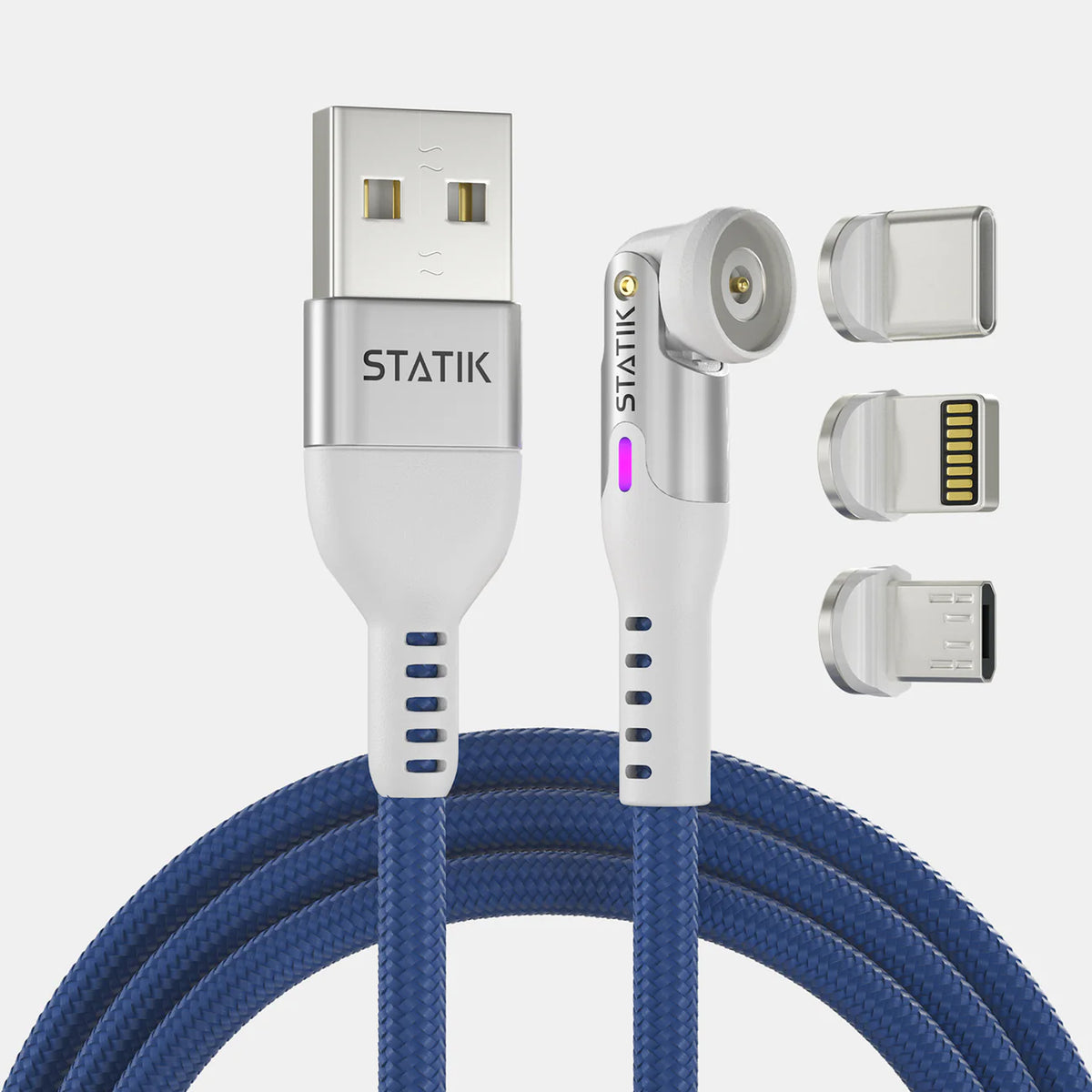
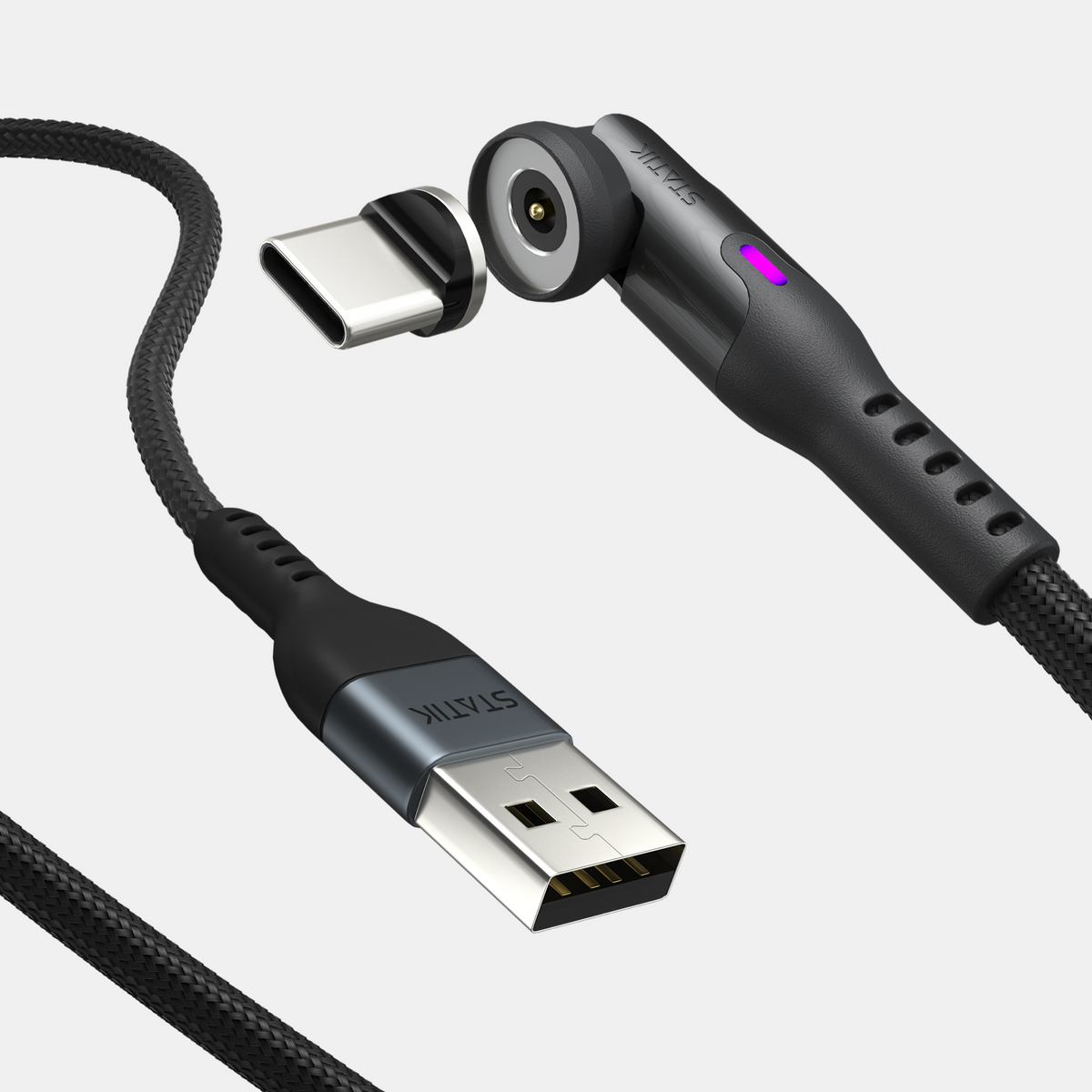
The system has two parts. A small magnetic tip stays inserted in your device's charging port at all times. The cable itself has a magnetic connector on its end. When you bring the cable close to the tip, the magnets snap together, creating an electrical connection. This design means you never push anything into the port again.
The Two-Part Design Explained
The magnetic tip serves multiple purposes. It protects the port from dust and debris when the cable is not attached. It also eliminates the wear which comes from repeated plugging and unplugging. The cable connects only when you need it. And if someone trips over the cord , it detaches cleanly instead of pulling your device to the floor. A magnetic usb charger works the same way, with the added benefit of being compatible with multiple tip types including USB-C, Lightning and Micro-USB.
Magnetic vs. Standard Cables: How They Compare at a Glance
The table below shows how both cable types perform on key factors. Use this to see which matters most for your daily use.
| Feature | Standard cable | Magnetic cable |
|---|---|---|
| Connection type | Friction (push to insert) | Magnetic (snap to connect) |
| Port wear | High over time | Nearly zero |
| Dust protection | None | Magnetic tip acts as a dust plug |
| Trip protection | Device falls to the floor | Cable detaches, device stays put |
| One-handed use | Requires alignment and force | Snaps in place automatically |
| Charge speed | Up to 240W (USB-C PD) | Up to 100W (Pro models) |
| Data transfer | Up to 40 Gbps (USB4) | Up to 480 Mbps (Pro models) |
| Cable durability | Varies by brand | Reinforced nylon braid |
| Tip replacement cost | Replace the whole cable | Replace only the small magnetic tip |
| Price range | $5 to $50+ | $15 to $70+ |
Standard cables offer faster potential data speeds and higher maximum power delivery. However, most people do not need 240W for a phone. Magnetic cables win on convenience, port protection and preventing drops. The trade off is lower maximum data speed, which only matters if you regularly transfer large video files over a cable . For everyday charging, music streaming and GPS use in a car, both perform well.
Magnetic Charging Cable Pros and Cons
Every cable comes with strengths and weaknesses. Here is an honest look at both sides.
Pros
Port protection
The magnetic tip stays in place, so you never insert or remove a plug from the port again — eliminating the loosening that wears out standard cables over time.
Drop prevention
A tugged cord releases instead of pulling your device off the table or desk.
One-handed connection
The magnets guide the cable into place without looking or using two hands.
Dust blocking
The tip seals the port when the cable is not attached.
Universal compatibility
Swap the magnetic tip to charge USB-C, Lightning or Micro-USB devices using the same cable.
Cons
Lower data speeds
Most magnetic cables support up to 480 Mbps — fine for music and photos, but slower for 4K video files.
Tip management
The small magnetic tip can be lost if you remove it frequently, though spare tips are available for a low cost.
Higher upfront cost
A quality magnetic cable costs more than a basic standard cable — though it usually lasts longer.
Not all support fast charging
Standard models charge at 10W. You'll need a Pro model for 100W laptop charging.
Standard cables offer faster potential data speeds and higher maximum power delivery. However, most people do not need 240W for a phone. Magnetic cables win on convenience, port protection and preventing drops. The trade off is lower maximum data speed, which only matters if you regularly transfer large video files over a cable . For everyday charging, music streaming and GPS use in a car, both perform well.
Magnetic Charging Cable Pros and Cons
Every cable comes with strengths and weaknesses. Here is an honest look at both sides.
Pros of Magnetic Charging Cables
Port protection
The magnetic tip stays in place, so you never insert or remove a plug from the port again. This eliminates the loosening which happens with standard cables over time.
Drop prevention
A tugged cord releases instead of pulling your device off a table or desk.
One-handed connection
The magnets guide the cable into place without looking or using two hands.
Dust blocking
The tip seals the port when the cable is not attached.
Universal compatibility
You can swap the magnetic tip to charge USB-C, Lightning or Micro-USB devices using the same cable.
Cons of Magnetic Charging Cables
Lower data speeds
Most magnetic cables support up to 480Mbps, which is fine for music and photos but slow for 4K video files.
Tip management
The small magnetic tip can be lost if you remove it frequently, though spare tips are available for a low cost.
Higher upfront cost
A quality magnetic cable costs more than a basic standard cable, though it often lasts longer.
Not all support fast charging
Standard models charge at 10W. You need a Pro model for 100W laptop charging.
Are Magnetic Chargers Safe for Your Phone?
This is the most common question and the answer is yes when you use a properly designed cable from a reputable brand.
Magnetic chargers do not send power through the magnets themselves. The magnets simply hold the connector in place . Electrical current flows through metal contacts, just like a standard cable. A quality magnetic charging cable includes the same safety chips found in good standard cables, regulating voltage and preventing overcurrent. Statik cables, for example, include protection against overheating, overcharging and short circuits.
When Magnetic Chargers Can Be Risky
The risk comes from cheap, unbranded cables sold on discount marketplaces. These may have weak magnets which disconnect constantly, causing intermittent power that confuses the charging circuit. Poorly shielded cables can generate heat or fail to regulate voltage properly. Always buy from a known brand with safety certifications. A properly made magnetic charger is as safe as any standard cable.
How Magnetic Cables Perform in Real-World Scenarios
The best way to compare these cables is to see how they handle daily situations.
Bedside and One-Handed Use
In the dark, finding a charging port is frustrating. A standard cable requires aim and force. A magnetic usb charger solves this completely. Bring the cable near the phone and the magnets snap it into place. You can do this without opening your eyes.
Car, Travel and Daily Commute
While driving, fumbling with a cable is dangerous. Magnetic cables connect instantly with one hand. They also work perfectly with Apple CarPlay and Android Auto on Pro models. For travel, a magnetic cable with interchangeable tips means you carry one cord for your phone, tablet, earbuds . And even your friend's Android device.
Gaming, Video and File Transfer
Standard cables win for data intensive tasks. If you transfer 4K videos from a camera to a laptop, a standard USB-C cable is much faster. For watching video while charging, magnetic cables have an advantage. The 360 degree rotating head keeps the cable out of your hands, unlike a standard plug which sticks straight out from the bottom of the phone.
Which Cable Should You Choose?
Choose a standard cable if you regularly transfer large video files, need maximum charge speed for a laptop, or prefer the simplicity of a single piece with no removable parts.
Choose a magnetic charger cable if you want to protect your phone's charging port, hate fumbling with plugs in the dark, worry about tripping over cords or want one cable that works with all your devices. The convenience of snap on connection and the peace of mind from port protection make magnetic cables the better choice for most everyday users.
If you decide to switch, explore the full collection of Statik’s magnetic charging cable options to find the right model for your needs.
Magnetic Cables





FAQs About Magnetic vs. Standard Charging Cables
Yes. The magnetic tip is designed to stay in your device's port at all times. It is small, flush with the device body, and does not interfere with cases or daily use. It also acts as a dust cover, keeping debris out of the port.
A quality magnetic cable typically lasts longer than a standard cable because the port on your device experiences no wear. The cable itself, when made with reinforced nylon braiding, can last for years. The magnetic tips are replaceable, so you do not need to buy a whole new cable if a tip wears out.
No. A quality magnetic charger from a reputable brand is not bad for your phone. The magnets do not interfere with internal components, and the electrical connection is the same as a standard cable. Cheap , uncertified cables can be problematic. But that’s true for standard cables as well.
Yes, in several ways. They protect the charging port from physical wear and tear. They prevent dust and lint from building up inside the port. And they reduce the risk of drops by disconnecting cleanly when the cord is pulled.
Standard magnetic cables charge at 10W, which is fine for overnight charging. Pro models from Statik support up to 100W, matching most standard USB-C cables for laptops and tablets. For phones, both types charge at the same speed the phone requests.
Yes but only on Pro models. Standard magnetic cables are charge only. Statik Pro cables support data transfer up to 480Mbps, which works for music, photos, CarPlay and Android Auto. Large video files transfer faster on a standard USB-C cable.


