


The Best Place to Put a Phone Mount in Your Car
You finally picked up a phone mount for your car. You open the box, stick it somewhere, and hope it works. A week later, it keeps falling off the dash, or the phone blocks the windshield, or you have to look way down to see your maps. Getting the placement wrong is frustrating and distracting. For most drivers, the best place to put a phone mount is high on the dashboard, just to the right of the steering wheel, where you can see the screen without taking your eyes off the road.
This guide covers the pros and cons of every mounting spot, shows you how to set up your mount the right way, and helps you pick the position that fits your car and your driving style. Whether you have a sedan, truck, or SUV, the right spot makes every trip safer and more convenient. The Statik mount collection has options that work in any vehicle.
Where Should You Put Your Phone in the Car?
The dashboard, mounted high and slightly to the side of the steering wheel, works best for most drivers. It keeps the screen near your natural sightline so you can check directions with a quick glance. It also keeps the phone within easy reach without leaning forward.
Here is a quick ranking of the four main spots:
- Dashboard: Best all-round choice. Excellent sightline, easy reach, and strong hold with a vacuum or suction mount.
- Windshield: Closest to the road, but placement is restricted by law in many states. Only use the lower corner if it is legal where you drive.
- Air vent: Compact and easy to install, but blocks airflow and can wobble with heavier phones.
- Center console or cup holder: Very stable, but the phone sits too low for safe navigation. Your eyes have to leave the road for too long to check the screen.
The Best Places to Put a Phone Mount in Your Car
The best spot for a phone mount balances three things: a clear sightline, an easy reach, and a base that actually holds. Here is how each location performs.
On the Dashboard
Verdict: The best all-round spot for most drivers.
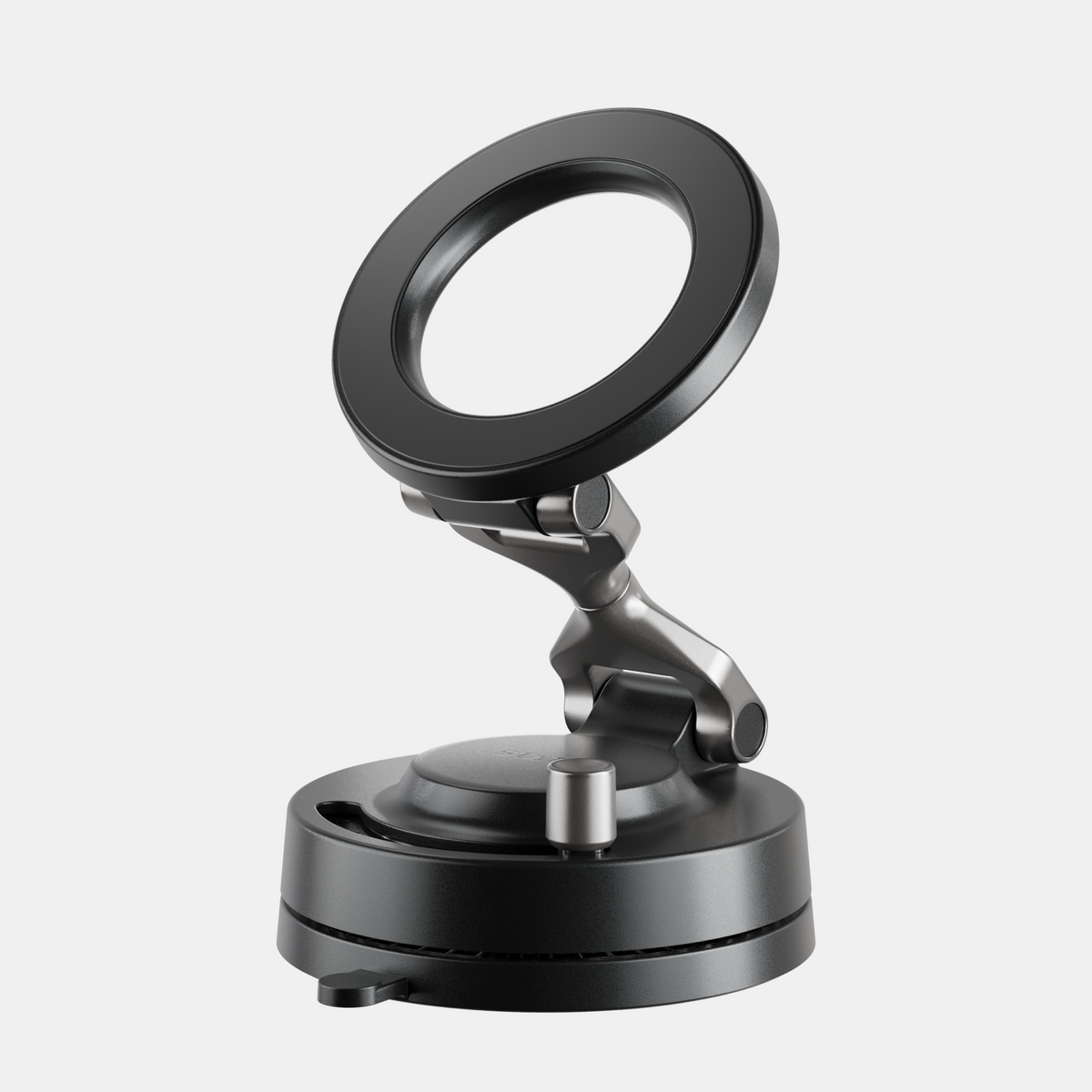
The dashboard keeps your phone near your natural sightline without blocking the windshield. You can tap the screen with a relaxed arm, and a quality vacuum or suction base holds firmly on a clean, flat surface. For a strong hold in any car, the HyperMount vacuum mount uses a powerful vacuum seal that stays put on both dashboards and windshields. It takes just seconds to install and works with MagSafe phones and Android devices.
- Pros: Excellent sightline, easy reach, works with most mount types, stable on smooth surfaces
- Cons: Needs a clean, level surface; can heat up in direct sunlight
On the Windshield
Verdict: Closest to the road, but check your local law first.
A windshield mount puts the phone at eye level, which means you barely move your eyes to check navigation. Many drivers prefer this spot for long trips or heavy GPS use. However, many states restrict windshield placement or limit it to a small lower corner. The phone can also block part of your view if you place it too high or too far to the left.
- Pros: Least eye movement, great for navigation-heavy drives, strong suction hold
- Cons: Often illegal or restricted, can obstruct view, glare from sunlight
On the Air Vent
Verdict: Compact and central, but it blocks airflow.
Vent mounts clip onto the slats of your car's AC vents. They are cheap, easy to install, and put the phone in a central position that is easy to reach. The downside is that the mount blocks the vent, so you lose that airflow. The vent blades can also sag under the weight of a heavy phone, especially on hot days when the plastic softens. In some cars with circular or unusually shaped vents, these mounts simply do not fit at all.
- Pros: Central position, no adhesive, quick installation
- Cons: Blocks airflow, can wobble, may damage vent blades with heavy phones
On the Center Console or Cup Holder
Verdict: Stable and tidy, but a longer reach and a downward glance.
A console or cup holder mount is stable because it sits in a fixed spot. It keeps your dashboard clean and works well for passengers who want to see the screen. The phone sits too low for safe navigation use because checking the screen requires a significant downward glance that pulls your eyes off the road.
- Pros: Rock-solid base, keeps the dash clear, good for passengers
- Cons: Eyes leave the road for too long, not ideal for turn-by-turn navigation
What Makes the Best Phone Placement While Driving
Three rules decide whether a placement spot is good or bad. Apply them to any car and any mount.
Line of Sight and Eye Movement
The phone should sit high enough that a quick glance keeps the road in your peripheral vision. Ideally, the phone should be near the top of the dashboard, never below the steering wheel. The farther your eyes have to travel from the road, the longer you are distracted.
Reach Without Leaning
You should be able to tap or dock the phone with a relaxed arm, without leaning forward or stretching across the cabin. A long reach means you take your eyes off the road for longer. A short, natural movement is always safer.
Not Blocking Airbags, Vents, or Controls
Never place a mount in an airbag deployment zone, over the instrument cluster, or where it covers climate or hazard controls. The passenger-side dashboard airbag area is especially important to avoid, because a phone can become a projectile in a crash.
How to Properly Mount a Phone in Your Car: Step by Step
Mounting a phone in your car properly takes about two minutes and no tools. Follow these steps for a secure, reliable setup.
- Choose the spot using the sightline-reach-clearance rule above. Sit in your normal driving position and pick a spot that feels natural.
- Clean the surface (dash, glass, or vent) with the included wipe so the base bonds fully. Dust and oil are the main reasons mounts fall off.
- Attach the base: press the vacuum or suction lever, clip to the vent, or peel-and-stick the adhesive pad. For vacuum and suction mounts, press firmly and lock the mechanism.
- Angle the cradle or magnetic head toward the driver, tilted slightly up. This reduces glare and makes the screen easier to read.
- Tug-test the base firmly before you drive. Then dock the phone and confirm the screen is glance-readable. If it wobbles or blocks something, adjust it now.
How to Set Up Your Phone Mount by Type
Setup differs slightly by mount type. Match the steps to what you own.
Magnetic and MagSafe Mounts
Confirm your phone has MagSafe or add a magnetic ring or case. Then snap it on - this is the fastest one-handed docking setup. It works best with dash or vent placement where the phone stays within easy reach. The Statik HyperMount is built with MagSafe compatibility and holds securely on both dashboards and windshields.
Vacuum and Suction Mounts
These offer the strongest hold and the most placement flexibility. Pump or lever-lock the base onto a clean, smooth dash or windshield. The HyperMount Gen 2 uses a vacuum seal that requires 66 pounds of force to move, so it stays put even on bumpy roads. For drivers who want one mount that works everywhere, a vacuum mount is the most reliable choice.
Vent Mounts
Clip onto a sturdy vent blade, keep the phone light, and accept the airflow trade-off. Vent mounts are not for heavy phones, and they work best as a temporary or budget option.
Placement Legality and Safety
Windshield placement is restricted in many U.S. states and other countries. Some states allow it only in a small lower corner, and others prohibit it entirely. Dash or vent mounting is almost always legal and safer. The phone must never block the driver's view or an airbag deployment zone. A properly placed mount does not damage the dash when installed on a clean surface. For up-to-date rules, check your state DMV website.
- Check your local laws before using a windshield mount
- Keep the phone out of the airbag path
- Never place the mount where it blocks the windshield view
Best Phone Mount Placement at a Glance (Comparison Table)
| Placement | Sightline | Reach | Hold / Stability | Best For |
|---|---|---|---|---|
| Dashboard | Excellent | Easy | Strong (vacuum/suction) | Most drivers — best all-round |
| Windshield | Best | Easy | Strong (suction) | Navigation — where legal |
| Air vent | Good | Easy | Moderate (light phones) | Compact setups, tight budgets |
| Console / cup holder | Lower | Longer | Very strong | Passengers, clean-dash lovers |
Key takeaways:
- For most drivers: dashboard placement + a strong-hold vacuum base + tilt the phone toward the driver.
- For navigation-heavy driving where windshield mounts are legal: a low corner position keeps eyes closest to the road.
- A Statik mount with a vacuum seal gives you the flexibility to choose dash or windshield without worrying about a weak hold.
Car Mounts




FAQs About Where to Put a Phone Mount in Your Car
For most drivers, high on the dashboard just to the side of the wheel. It keeps the screen near your sightline and within easy reach. A low windshield corner works too where it is legal.
Mount it high and slightly left or center so you can read turn prompts with a quick glance. Dashboard or upper-vent placement usually beats a cup holder, which pulls your eyes down too far.
It varies by state and country. Many restrict windshield placement or limit it to a small lower corner. Dashboard or vent mounting is the safer legal default. Check your local law before installing.
The safest placement keeps the phone high, off to the side, and out of the airbag zone. A glance at the screen should never block your view of the road.
Quality vacuum and suction mounts leave no residue and will not mark a clean dash. Adhesive pads can leave a ring, so a suction or vacuum base is safer for a factory dash.
Clean the surface before mounting, use a strong vacuum or suction base on a smooth spot, and tug-test it before driving. Cheap suction cups fail in heat: a powered vacuum mount like the HyperMount Gen 2 holds far longer.


